Abstract: The Nile is a common natural resource and the longest international river that crosses the boundaries of 11 countries with no binding law allowing its riparian states the right to use its waters. However, among the riparian, Egypt and Sudan have used and established historical rights through the Bilateral Agreements entered in the years 1929 and 1959. Meanwhile, in the early 1980s, other riparian countries have begun to claim a fair distribution of the Nile water as their population and economic demand so desired they challenged unfair utilization by two riparian’s and appeared continuously as a counter-hegemonic collective power in the Nile hydro politics agenda claiming and negotiated for a system of shared water resources. In particular, the Nile Cooperative Framework Agreement (CFA), which was drafted in 1999 and was hampered by the Egyptian-Sudanese process, provided a better framework for the Nile water use and management than previous riparian countries' deals. The incidence of the Grand Ethiopian Renaissance Dam (GERD) become another point of discourse that shifted and triggered the Nile water issues as the agenda of the three riparian countries. The basic premise of this article is that disregarding the quest for fair utilization of the Nile River and questions related to the GERD as the only concerns of the three riparian countries violates international water law rules regarding Transboundary Rivers. I argued that such an approach will have a spillover effect and not have a lasting solution to utilize and manage the common water resources and that will continue the tendency to pursue unilateral interests instead of sharing the common resource. Rather than intensifying the riparian joint efforts to have a law that enable them equitable access to shared water, I did not believe that a separate tripartite negotiation on a dam or a project has resulted in a basin-wide legal framework and regional solution to Ethiopia's natural and legal right to use the Nile river resources. Any decisions on the use and administration of the Nile water, including the tripartite negotiations between Egypt Sudan, and Ethiopia which excludes other riparian countries, will inevitably raise questions of legitimacy like the 1929 and 1959 colonial agreements. The tripartite approach downgrades the achievements of the NBI and will bring the Nile water use and management question back from cooperation to a conflict system, and allow the same experience of conflict resolution in the basin to be taken by unilateral action on the shared water.
Keywords: tripartite negotiations, basin-wide legal regime, fair utilization, riparian, cooperation, GERD, international water law
1. Introduction
The quest for equitable and reasonable utilization of international water resources is a fundamental right for sovereign states whose territory is bifurcated by shared water resources. The principle of equitable and reasonable utilization, the obligation not to cause significant harm, principles of cooperation, information exchange, notification, consultation, and peaceful settlement of disputes are widely acknowledged by modern international conventions, agreements, and treaties to some extent in state practice. It is widely understood that the effective implementation of these principles could able to create effective basin-wide water resources utilization and management system involving riparian countries of shared watercourses and hence, maintain stable mutual benefits among riparians. However, the application of these rights and obligations varies from river basin to river basin associated with different hydrologic, history, and peculiar inter-riparian relationships of a given basin under study. Due to the inability to establish a basin-wide legal regime that can ensure the common interests and rights of the riparians, the water issue in some basin areas in the world has become a source of conflict, political conspiracy and foreign intervention, economic, environmental, social unrest, and other an inappropriate relationships. Instances of this can be the Nile basin in Africa, Tigris and Euphrates in the Middle East, the Aral Sea basin in Central Asia, the Parana basin in South America, and the Ganges basin in Asia (Petrella, 2001). Upholding international law principles with the view to create a regulatory basin-wide legal regime that can control and change the state of water tension into transboundary cooperation becomes an unreplaceable solution among the nations (Rahaman and Varis, 2005).
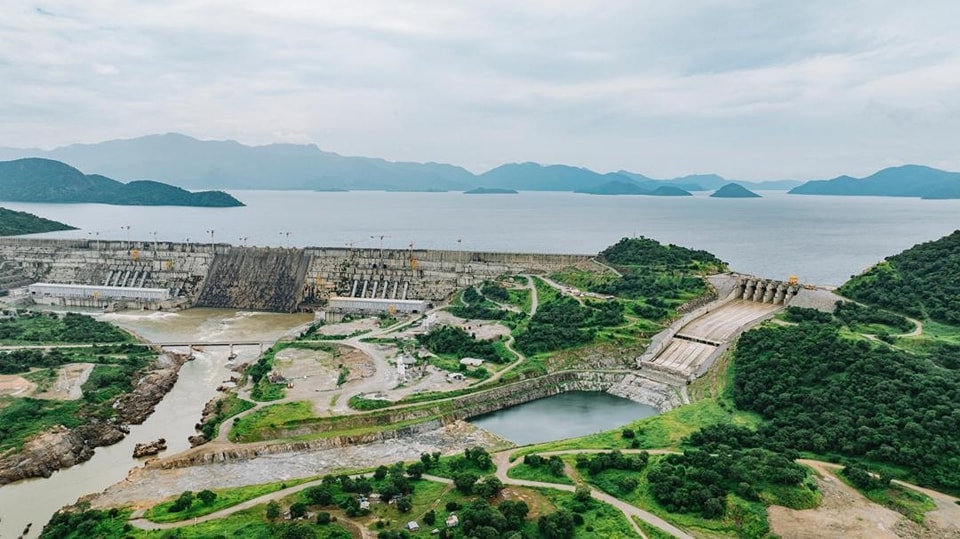
For the last decades, multiple rounds of negotiations have been held between riparian’s, and no notable progress has been achieved none of them are agreed upon and become a law to regulate the Nile River basin. The Nile Basin Initiative is the first and most recent regional organ that helped riparian countries to understand that the Nile River is a regional watercourse and its utilization and management must be approached from a regional perspective. It is a remarkable historical incidence, a legal and institutional setup that properly witnessed the first era of counter-hegemony in the Nile basin, and a cause for the preparation of the Nile Cooperative Framework Agreement (CFA). Equally important, the construction of the GERD in March 2011 further fueled and dislocated the issue of the utilization and management of the Nile water from regional perse to tripartite dialogue which created a clear change in the efforts toward a basin-wide legal and institutional riparian deal.
The main purpose of this article is designed to address four main issues as regards the utilization and management of the shared Nile waters. First, the rights and obligations emanating from shared transboundary rivers shall be governed by a legal regime negotiated by all riparians. Secondly, the negotiations, agreements, declarations, and other questions regarding the utilization and governance of shared resources shall be conducted with the full participation of all riparians concerned. Thirdly, any controversy arising from the utilization and management of the shared resource shall be settled through a basin-wide channel promoting mutual understanding and benefits of all riparians. Hence, claims of any riparian country that wants to invoke the development activities in the Nile River shall be heard within the basin-based system by all riparians even if the problem priorly relates to one or more riparians. Fourthly, unilateral project-oriented negotiation and dialogue cannot be taken as a good practice because it hinders the commitment toward cooperation and is a continuous obstacle to the equitable and reasonable utilization of the Nile waters. Project-based negotiation cannot bring a sustainable solution for the utilization and management of Nile waters in the basin.
The final argument under this paper is that any debate across the Nile water shall be handled in more preference to a human rights-based approach setting aside the political rangling against the human right to development of peoples on their natural resources. Water is a basic component of natural resources, it formulates part of the sovereignty of peoples that entitled them to determine and promote the development of their respective resources. Governments of riparian countries should pursue people's right to natural resources on an integrated approach that ensures the right to equitable and reasonable utilization of the Nile waters for people residing in the basin.
I argued that the claims and negotiations between three riparians Ethiopia, Sudan, and Egypt regarding the GERD are contrary to the principles of international water law and also will have the potential move to shift the previous conflict to cooperation efforts towards cooperation to conflict which in turn promotes individual content of utilizing the shared resource in the absence of basin-wide legal and institutional system.
This article has five sections, section one is about the introduction, section two inter-riparian history, and hydrology of the Nile River basin. Section three is about treaties entered during the colonial regime concerning the utilization of the Nile waters, and its impact on a further cooperative agreement in the basin. Section four focuses on multilateral negotiations by riparian in the Nile basin, and section five is the fundamental part dealing with the tripartite negotiations concerning the GERD and its implication for the principles of international water law and sustainable utilization and management of the Nile waters in general. Finally, a conclusion and recommendation are drawn in an optimistic approach by an understanding of the legal and hydro politics of the Nile water issue raised in this topic. The article used a qualitative research method and analyzes legal instruments and relevant literature to support its argument.
2. Inter-Riparian Relation, History, and Hydrology
2.1 Inter-Riparian Relation
In the past 25 years, many countries have seen their water supplies reduced by half as their populations have doubled and the demands on water supplies have exceeded the amount of water available (David. K; 2010:4). As populations continue to rise, many scholars have argued that competition for this scarce resource could exacerbate the political instability in the region resulting in a water war (Allan, 2002: 256) Today, 276 international river basins in the world are shared by 145 nations in Which distinct hydro political environment exists in each basin (Council for European Studies, 2018).
As Peter Glerik suggested, international river basins shared by riparian states make water a likely source of conflict based on the reasons: 1). the degree of water scarcity and, 2). the capacity to which the water supply is shared between states, 3). the power exerted by the basin states and 4). the accessibility to alternative freshwater sources. For instance, the Nile and the Jordan River basins, which are shared by 11 and 5 riparians, respectively are already experiencing water scarcity and increased competition for water resources as a result of population growth and increased water demands for economic development (Wolf et al, 2006:2).
Accordingly, as water resources become increasingly scarce in the Nile basin, the risk of conflict erupting between competing riparians is expected to intensify. Historically, Egypt has built diversion and storage schemes within its territories to secure the flows of the Nile to meet its growing freshwater demands, often resulting in armed hostilities with its riparian neighbors (Water policy 2008:8). On the other side, riparian states including Ethiopia that contributes 80 percent of the Nile water repeatedly challenged the status quo of Egypt and claimed equitable share from the water resource (Water policy 2008:8).
To date, a Cooperative Framework Agreement is formulated by riparian states however; the most beneficial riparian states in the Nile Basin Egypt and Sudan have created an obstacle to the realization of the CFA. Whether we see water conflicts or basin wide cooperation in the future may well depend upon whether these riparian’s decide to play in integration or go it alone in their pursuit of reasonable utilization of the Nile water Security. For this reason, one may raise two questions to be answered in the basin scenario.
- How do riparian stets in the Nile basin achieve equitable water utilization?
- Due to increasing demand for development, will unilateral action on Nile waters lead to increased conflict between riparian states or will Egypt and Sudan cooperate with other riparian states to conserve and utilize the shared water resources?
The Nile River basin is currently shared by 11 riparian states including Rwanda, Burundi, the Democratic Republic of Congo (DRC), Tanzania, Kenya, Uganda, Eritrea, Ethiopia, Sudan, South Sudan, and Egypt. The total population of the countries that share the basin is almost 300 million with half of this population completely dependent upon the Nile (Swain, 2008:202). All these countries in the Nile basin are facing relatively high population growth. The population of Ethiopia, Sudan, and Egypt alone is expected to be close to 340 million by 2050 (Swain 2008:202), the demand for the Nile’s water resources is expected to grow substantially in the coming years while utilizable. Nile flows are predicted to decrease as a result of increased demand for irrigation, industrialization, urbanization, and water shortages associated with climate change (Alan, N.2011:17).
As Ethiopia overcomes its long history of rebellion, civil war, disintegration, and famines, it faces increased pressure to develop its economy and achieve self–sufficiency in food production by developing its share of water projects on the Nile for irrigation and hydropower. However, any dams that Ethiopia builds (For example the GERD) along the Nile are likely to be seen as a threat to the water security of lower riparian neighbors, as 86 percent of the Nile’s flow originates in Ethiopia.
2.2 Hydrological Environment
The Nile is one of the few Rivers that flows from South to North. Starting from its bifurcated sources in humble springs along the Blue and White Nile sub-basins, the Nile traverses a distance of 6825-kilo meters across a vast expanse of land with diverse climatic and natural formations varying from humid mountainous highlands receiving abundant rainfall, semi-arid and arid regions receiving little or no rainfall (Tesfaye. 2001:8). As D. Grey et.al stated the hydrologic environment of a basin is one of the significant determinants shaping the pattern of inter-riparian relationship and with it the possibility of equitable, cooperative development and utilization of the water resources. The hydrologic environment, i.e. the absolute level of water resource availability, inter-, and intra-annual variability, and its spatial distribution which is a natural legacy that a society inherits (D. Grey and C. Sad off, 2007:545-548) may be easy and hence conducive for equitable utilization.
The hydrologic environment of the Nile though is even worse and rather epitomizes the category of more difficult hydrology where rainfall is markedly seasonal – a short season of torrential rain followed by a long dry season that requires the storage of water or where there is high inter-annual climate variability, where extremes of flood and drought create unpredictable risks to individuals and communities and nations and regions and require over year water storage (water policy 2007 545 -548). Indeed, the most significant hydrologic challenge in the Nile basin pertains to the river’s discharge which is too small to match its reputation as the world’s longest river. The fabled Nile shows the lowest specific discharge of comparable large rivers (J. Kerisel, 2001:3 ) as the relatively meager 84 Billion cubic meters of water it carries downstream annually constitutes only a mere cup (2%) of the Amazon perhaps a glass ( 15%) of the Mississippi, or at best a pitcher (20%) of the Mekong.
Another challenge pushing forward to the peculiar geographical aspect of the Nile is the unbalance contrast between the riparian state which contributes almost all the water to the Nile but uses almost none (Ethiopia) and that which contributes nothing to the Nile but uses most of its water (Egypt) that established the asymmetric use of water resources. The Nile basin thus constitutes a singularly distinct hydrologic environment where the pattern of utilization of the waters is in stark contrast to flow contribution. The anomaly is twofold, as the two downstream riparians Sudan and Egypt have consolidated their control over the entire flow of the water resources for decades.
2.3 Historical incidents in the Nile Basin.
Some authorities identify the Nile River Basin as one of the hot spots in an area where violent conflict could break out over the shared water resources because of the various hydro-political intricacies it involves. Mounting demands for more water, alarming population growth, the absence of comprehensive legal and institutional frameworks, and relations among the riparian states that are marred with suspicion (twists and turns) and misunderstanding are among the major factors creating the potential for an extreme conflict in the basin. From the historical perspective, several forces have contributed to molding the issue of water utilization, management, and development in the Nile River basin in the past century. Among the notable factors that shaped the legal regimes over the Nile, are the presence in the basin of British interests during the colonial era and the water security policy pursued by Egypt.
For Egyptians, the water of the Nile is, an issue of national security (David .k 2010:6) and core values and interests defining their foreign policy. In his official statement Jemal Abdul Nasir, on the outcome of the construction of the Aswan High Dam, stated that “Egypt would no longer, after the construction of the Aswan Dam, be the historic hostage of the upper riparian states of the Nile basin” (Daniel Hillel, 1994:123).
A similar statement is found in the speech made by Anwar Sadat, following the Camp David Peace Agreement with Israel, in which he predicted that the only issue which could take Egypt to war was water (water policy 2008:21). He was referring to the water of the Nile and what he was trying to underscore were the Nile water’s special place in Egypt’s life and policy, and the reactions of Egypt if this was tampered with. In 1980, former Egyptian Minister of State for Foreign Affairs (later United Nations Secretary-General) Boutros, Boutros-Ghali commented that the next war in our region (North-East Africa) will be over the water of the Nile, not politics (water policy 2008:21). Generally as described by Zeitoun and Cascao, the national framework of Egypt (as the Nile basin hegemony) has been reflected in its unequal control of the Nile water resources among riparian states and maintains its status quo by deploying several strategies unilaterally over the shared resources (Ana Elisa Cascão and Mark Zeitoun 2010: 27).
The bargaining power of Egypt under international diplomacy enabled it to influence riparian states not to utilize the Nile water in particular the water tower of the Nile, Ethiopia has been a victim of Egyptian strategy. For instance, the World Bank Operational Directive 7.50 which allowed objecting to Egypt's every financial loan to Ethiopia is among the diplomatic impositions that Egypt played against the interest of Ethiopia /water policy, 2008:22).
The ambitions of Ethiopia to fully utilize the Nile water remained unsuccessful for decades even if the first comprehensive strategy entitled “Land and water resources of the Blue Nile” a document having 17 volumes was prepared in 1964 in cooperation with the United States of America Bureau of Reclamations.
3. The Nile Water Colonial Agreements and Their Effect on Interstate Relations
3.1 The 1891 Anglo- Italian Protocol
The protocol was signed on April 1891, between Great Britain representing Egypt and Sudan, and Italy, on behalf of Eritrea. The primary purpose of the protocol is to delimit the colonial boundary of Great Britain and Italy in the Sudan and Eritrea. The Nile issue was addressed under Article III, which states that “the Italian government engages not to construct on the Atbara River, because of irrigation, any work which might sensibly modify its flow into the Nile (Tilahun, 1979: 49). The language used in this article was too vague to provide clear rights to the use of water. In addition, the protocol did not mention the upper riparian states, where a substantial share of Nile water comes from. Thus, it does not bind other riparian states in the fact that the Nile River did not flow in the territory colonized by Italy which was the basis for its claim to its water.
3.2 The 1902 Agreement between Great Britain and Ethiopia.
This agreement was signed on 15 May 1902, between Britain on behalf of Sudan and Ethiopia to delimit the boundary between Ethiopia and Sudan. Even if the purpose of the agreement was to limit boundary, Article III of the agreement imposed an obligation not to construct or allow to be constructed any work across the Blue Nile, Lake Tana, or the Sobat, which would arrest the flow of their waters except in agreement with his Britannic Majesty’s government and the government of Sudan` (Tilahun; 1979:49). The Amharic version, however, gave different meaning and understanding to Ethiopia (Tilahun, 1979:49). The Amharic version restricts Ethiopia not arrest the flow of water. However, Ethiopia did not ratify the agreement and its meaning remained controversial.
3.3 The 1906 Tripartite Agreement (British, France, Italy)
The treaty was signed on 13 December 1906 between the three colonizers with the use of the Nile water in Ethiopia’s sub-basin. Article 4(a) of the Agreement states: “To act together----- to safeguard the interests of Great Britain and Egypt in the Nile Basin, more especially as regards the regulation of the waters of Atbara River and its tributaries without prejudice to Italian interests” (Wondimeneh, 2001: 79). This treaty, in effect, denied Ethiopia its sovereign right over the use of its water. Ethiopia rejected the treaty and indicated that no country had the right to stop it from using its waters (Wondimeneh, 2001:79).
3.4 The 1925 Anglo-Italian Exchange of Notes
This agreement was communicated in December 1925 concerning Lake Tana which states “Italy recognizes the prior hydraulic rights of Egypt and Sudan -- not to construct on the headwaters of the Blue Nile and the White Nile and their tributaries and effluents any work which might sensibly modify their flow into the main river “(https://www.ethiopians/abay/engin.htm1#1925). Ethiopia opposed the agreement and notified both parties of its objections. When an explanation was required from the British and the Italian Governments by the League of Nations, they denied challenging Ethiopia’s sovereignty over Lake Tana (Tilahun, 1979:90). Notwithstanding, however, there was no explicit mechanism enforcing the agreement.
3.5 The 1929 Nile Waters Agreement
The 1929 agreement was concluded between Great Britain (on behalf of Sudan) and Egypt. The agreement aimed to utilize the Nile waters in the proportion of 48 and 4 billion cubic meters of Egypt and Sudan respectively. In effect, this agreement gave Egypt complete control over the Nile during the dry season when water is most needed for agricultural irrigation. It also severely limits the amount of water allotted to Sudan and provides no water to any of the other riparian states including Ethiopia (agreement on 7 May 1929).
3.6 The 1959 Agreement for the Full Utilization of the Water of the Nile
The agreement for the full utilization of the Nile waters was signed in Cairo on 8 November 1959 between Egypt and Sudan, to realize, through joint projects, the full control and utilization of the Nile waters by replacing the 1929 Agreement which did not extend to include complete control of the river waters by the two states (preamble of the 1959 Agreement). This objective to fully control and exclusively utilize the Nile waters has been rightly described as patently anomalous (okidi, 1980: 429). The anomaly lies in the fact that, while it is purely bilateral, it seeks to apportion the entire flow of the Nile to Egypt and Sudan, excluding the interests of any riparians notably Ethiopia (Brunnee and Toope, 2002:125).
The agreement made possible the launching of Nile control projects – the Sudd el Ali and the Reseires dams to be built in Egypt and Sudan respectively which would increase the flow of the Nile (the 1959 Agreement Article 2(1) and (2). It also reaffirmed the acquired rights of the two parties measured in annual volumetric terms at 48 and 4 billion cubic meters respectively (the 1959 Agreement Article 2(1)). This volume of acquired rights was thus deducted from the total annual flow, and the net benefit after a further deduction of 10 billion cubic meters as loss of over-year storage of 22 billion cubic meters to be obtained from the sudd el Ali reservoir was allocated to Egypt and Sudan, which received 7.5 and 14.5 billion cubic meters respectively (the 1959 Agreement Article 2(4).
Though the agreement is concluded between the two countries which created a new era in the history of the Nile Basin, the agreement is, in substance, not much different from previous colonial-era treaties as its main thrust is to sanction a monopoly on the waters of the Nile by Egypt and Sudan. The viability of this monopoly though is without any legal foundation, as the agreement on which it is anchored in a typical bilateral agreement subject to the pacta tertiis nec no cent nec prosunt rule of treaty laws (Vienna convention, 1969: Arts, 24-35), which, therefore, has no binding force on other riparian’s.
3.7 The 1993 Framework for General Cooperation between Ethiopia and Egypt
The framework was signed on 1 July 1993 between Egypt and Ethiopia the first bilateral agreement between the two riparians regarding the Nile waters, after the colonial period (kefyalew, 1997:6) It stipulates that future negotiations between Ethiopia and Egypt, concerning the utilization of the water of the Nile, would be based on the rules and principles of international law (Arsano, 2000:52). The framework agreement was only indicative of the base of future negotiation and failed to provide detail working rules. The ‘No harm’ rule principle was mentioned in it and for this reason, some criticized it as favoring Egypt and compromising Ethiopian’s sovereignty over the Nile (T. Tafesse, 2001:80) Even if the ‘No harm’ rule was part of the framework, it did not mean that it was the sole principle on which shared water allocation would be based since the rules and principles of international law as referred to as the guideline for negotiations in the document itself. For instance, apart from the “No harm” rule, the principle of equitable and reasonable utilization of international Water law principle is a famous principle invoked by lower riparian states all over the world, in particular a principle on which Ethiopia’s interest in the Nile water is based. The framework agreement did not in effect as it merely represents the first attempt by the two states to come together and does not have a legal effect on the parties.
All of the agreements signed concerning the Nile Basin water utilization and management are of limited scope in their application. None of them managed to involve more than three states and are concluded mainly to secure the interest of the two lower riparian states. They are, therefore, bilateral and devoid of legal application to the other riparian states. The fact that the treaties are bilateral means that they cannot legitimately be perceived to regulate all of the Nile waters and all the Nile basin states.
One of the legal arguments against colonial treaties concluded in the Nile water is that the colonial circumstances under which the agreements were made have changed so fundamentally that they are not valid anymore. The doctrine of rebus sic stanti bus which is recognized in customary international law and the convention of Vienna concerning the law of treaties states that a state has a right to terminate the application of a treaty if a fundamental change of circumstances occurs (Art, 62 of the Vienna Convention on the Law of Treaties 1969). This change of circumstances exists when the changed circumstances are those that make up the essential grounds on which the states consented to be bound by the agreement and the change affects the remaining obligations of the parties in a radical way (Vienna Convention on the Law of treaties Art 62, 1969).
The position of the upper riparian states was put forward by a statement of the newly independent Tanganyika, (the Nyerere doctrine or the tabula rasa theory) and states that ` former colonial countries had no role in the formation and conclusion of treaties done in the colonial era, and therefore they must not be assumed to automatically succeeded to those treaties `(R.O Collins, 2000:257). The upper riparian states have adopted this concept and continuously rejected the colonial agreements regarding the Nile (McCaffrey, 2001:245-246).
Colonial treaties also violate the principle of self – determination and permanent sovereignty over the natural resource of states. The free determination of people’s political status and the ability to freely pursue their economic, social, and cultural development has been a focal issue in the decolonization process and has been recognized as a jus cogens principle (Antonio Cassese, 1995:133-40). This argument states that the treaties violate the above principle reason that they freely give away the natural resources of a previously colonized state without its consent or any past or future control over its resources (Vienna Convention on the Law of Treaties, Art 68, 1969).
The 1997 United Nations Convention on the Non-Navigational Uses of International Watercourses in its provisions brought a new paradigm shift that may be favoring the interests of upper riparian states. The convention under Articles 5 and 7 recognized the rights of riparian states to the equitable and reasonable utilization of shared water resources. At the same time, the Convention imposed an obligation not to bring significant harm to other states along the watercourse. In effect, the convention offers a bridge between the divergent water law principles of absolute territorial integrity, which favors the lower riparian states, and the principle of absolute territorial sovereignty (natural rights) which favors the upper riparian states, by offering limited territorial integrity and limited territorial sovereignty to address the common good (David. K.2010:41).
The principle of absolute territorial integrity favors the lower riparian states because it allows them to accuse the upper riparian states of any measures they take whose effect is significant to the lower riparian states' territories. The principle of absolute territorial sovereignty on the other hand is advantageous to the upper riparian states since it holds water bodies as integral parts of a state’s territory. “The prior appropriation” principle, although favoring neither the upper riparian states nor the lower riparian states, protects the rights of use for any state that first utilized the water (FAO-UN, 1998:29-3). In the case of the Nile basin states, Egypt and Sudan defend their position concerning the utilization of the Nile water citing the principle of prior appropriation and absolute territorial integrity (FAO-UN 1998:29-31). Although the upper riparian states could base their rights to Nile water use on the principle of absolute territorial sovereignty, however, they have chosen to pursue cooperative negotiation for equitable utilization; however, a comprehensive cooperative framework agreement inclusive of all riparian states could not yet come into effect.
The main aspirations of the Nile- related agreements were to prevent upper riparian states from constructing dams and utilizing the waters of the Nile to allow Egypt to maintain undiminished flows to quench its thirst (Brunnce and Toope, 2002:122). However, I cannot argue from this that a zero-sum game will continuously be won by the lower riparian states since the existing legal regime reflects the power politics of colonial times and not that of today. The shift in power politics is reflected by how the upper riparian states have pushed for and signed the Nile CFA Agreement putting Egypt and Sudan in the spotlight.
3.8 Multilateral Negotiations in the Nile River Basin
It has been observed that the problem of achieving effective cooperation between riparian states represents one of the greatest obstacles to ensuring the equitable and reasonable utilization of the Nile waters. The Nile River Basin is a focus in point, combining the greatest strategic and symbolic value for the riparian states. For many decades after independence, the Nile River riparian states have engaged in numerous bilateral and multilateral diplomatic initiatives to resolve the long-standing dispute over the Nile River. These developments, as well as the evolving socio-economic and political needs of the riparian states, have led to harassing lower riparian states, (Egypt and Sudan) to come to agree with a legal regime respecting and adhering| to the equitable utilization of the shared resource. In other words, the central objective of the riparian states is to put in place a comprehensive international legal regime that would in many respect conform to international water law principles adopted by the United Nations and provide for equitable utilization of waters in the Nile basin.
Since the 1960s, several attempts have been put in place by the riparian states to establish an acceptable legal regime for the utilization of the Nile waters and its international drainage system. These include, among others, the Hydromet negotiation, Undugu (Swahili for brotherhood), the Technical Cooperation Committee for the Promotion of the Development and Environmental Protection of the Nile Basin (TECCONILE), and The Nile Basin Initiative (NBI). The NBI’s basin – Wide cooperative framework aims to realize a shared vision of sustainable socio-economic development through the equitable utilization of and benefit from the common water resources, bringing riparians together and making the Nile one of its central development concerns in recognition of the fact that existing tensions over Nile water use could worsen if countries pursue unilateral projects.
4. The Nile Basin Cooperative Framework Agreement
The Nile CFA is the quintessence of the transformation in Nile riparian cooperation as it, for the first time brought onto the cooperative agenda the fundamental issue of equitable reallocation of the Nile waters. Being such a bold move to transform a basin noted for unilateralism and competition into one governed by a permanent legal and institutional framework agreed upon by all riparians. The draft Nile Basin CFA was submitted to the Nile Council of Ministers which met in Entebbe, Uganda, in June 2007. Despite extensive discussions, an agreement could not be reached on the question of “water security” introduced by Article 14 of the draft, in respect of which Egypt and Sudan entered reservations calling for the replacement of Article 14(b) thereof by a new sub Article (b) which the other riparian found unacceptable. Nile Basin states agree, in a spirit of cooperation to work together to ensure that all states achieved and sustain water security and do not significantly affect the water security of any other Nile Basin states. However, the two riparian states Egypt and Sudan rejected the proposal and instead provide an amendment that obligates all riparians not to adversely affect the water security and current uses and rights of any other Nile Basin states.
Given the prevalence and importance of CFA in the Nile basin, one may question its long-standing solution for handling future water use conflicts in situations where Nile water is considered a national security issue by lower riparian states, in particular Egypt.
More importantly, if Egypt and Sudan are at odds and refused to engage in a genuine basinwide multilateral negotiation process, would tripartite negotiations relying on an individual project basis bring a viable solution to the utilization and management of the Nile waters and be legitimate within the framework of basinwide scenario and international water law principles.
The aspiration to have a legal and institutional framework for the utilization and management of Nile water on one side and the struggle to maintain unjust benefits of water on the other curved the initiatives of NBI into a complicated basin scenario. Egypt and Sudan, as they have been doing in the past, hastily introduced an illegal idea (water security) that is not compatible with the principle of international water law, the efforts of NBI, and the fates of CFA aspired to shape the Nile framework from conflict to cooperation remained fruitless.
5. The Paradox of Tripartite Negotiations and the Rights of Riparian’s in the Nile Water
Following the construction of the GERD in March 2011, the tension between the three countries is amplified by and reinforced by larger regional tensions as power dynamics in the northeast continuously challenged and blows up the political atmosphere beyond North-East Africa to the international community. This is a new incidence that occurred while the quest for the basin-wide legal and institutional framework was a recurrent issue at times. The construction of the GERD can be seen in line with Ethiopia`s long-standing claim to equitable and reasonable utilization of the Nile waters. However, the positions of the two lower riparian states cannot be formulated in a consistent way but can be looked at in three main instances.
The first and fundamental issue stems from the non-recognition of Ethiopia`s right to utilize the Nile waters. On the basis of this argument, the two countries, in particular, Egypt has tried their best to stop the construction of the dam. Secondly, while proving that no human power can stop its construction, their position flows down to the principle of the duty not to bring significant harm. This led to the establishment of the first panel of experts and confirmed in its reports that GERD could not bring significant harm to the lower riparian states. Thirdly, still, Egypt and Sudan did not get trust and confidence in Ethiopia`s project and continued to challenge the filling modalities of GERD. Along this trajectory, tripartite negotiations become a permanent forum in the Nile basin setting aside the concerns of all riparians. It is paradox because its process is against international water law principles followed by unformidable results with unsustainable prospects.
The three states signed a framework agreement called the Declaration of Principle (DoP), a platform used to guide their tripartite negotiations. As seen in practice, the negotiations were disorganized and insincere, stemming from the desire to gain diplomatic superiority over each other. This process has turned the common effort that started on the utilization and management of the water resources of the Nile into a tripartite one, which leads to conflict instead of cooperation.
Within the context of shared water resources in the Nile basin, tripartitism and riparianism represent literary individualism and multilateralism/wholism. Tripartitism promotes the claims and interests of the three states. However, multilateralism/wholism equates with the concerns of all riparian states in the Nile basin. These Nile water dilemmas can be easily confirmed by comparing colonial treaties made between the lower riparian states and the existing tripartite negotiations among the three riparian states, Sudan, Egypt, and Ethiopia in one side the formulation of CFA under the auspices of NBI on the other. One of the fundamental criticism against the legitimacy of the colonial treaties is that the two riparian states totally ignored other riparians and make total use of the shared Nile waters for decades. The currency of this behavior is individualism. Let alone sharing the waters of the Nile, other riparian states were intentionally abandoned from participating in the negotiations of the 1929 and 1959 treaties. Because of this, the legal status of colonial treaties has been destroyed while the demand for equitable and reasonable utilization of the shared water is formally shaped by the NBI lead approaches.
However, following the construction of the GERD in March 2011, the Nile water agenda falls at the hotspot between the three riparian states and triggered back earlier efforts. The following section tries to summarize the positions of international law on the rights and obligations of riparian states.
5.1 International law on the rights and duties of riparian states.
Even though, the international community is yet to agree on a uniform mechanism/ convention to manage transboundary water resources (Salman, 2007a, p.638), over the years, some customary and general principles of international law related to water have become the basis of major international conventions, treaties, and agreements for transboundary water resources management. The UN Convention on the Law of the Non-Navigational Uses of International Watercourses which was adopted in 1997 and entered into force in August 2014 can be worth mentioning in this regard. The Convention embodies a number of principles on equitable and reasonable utilization, including the definition of factors relevant to equitable and reasonable utilization; the obligation not to cause significant harm; the general obligation to cooperate; regular exchange of data and information; the relationship between types of uses; notification and response, among others(http://sdg.iisd.org/news/un-watercourses-convention-to-enter-into-force-following-35th-ratification/). Though the Convention can be used as a point of reference in dealing with the utilization and governance of transboundary water resources, it could not have a legal effect against states who are not a party to such a Convention.
The rights and duties of riparians on shared water resources can be seen in line with two international law legal regimes and one theory/ legal doctrine. The theoretical foundation of the principles of international water law related to transboundary water resources management evolves from different theories and doctrines. This includes the theory of absolute territorial sovereignty, the theory of absolute territorial integrity, and the theory of limited territorial sovereignty.
The theory of limited territorial sovereignty is based on the assertion that every state is free to use shared rivers flowing on its territory as long as such utilization does not prejudice the rights and interests of the co-riparians. In this case, sovereignty over shared water is relative and qualified. The co-riparians have reciprocal rights and duties in the utilization of the waters of their international watercourse and each is entitled to an equitable share of its benefits. Principles of equitable and reasonable utilization and obligation not to cause significant harm are the outcome of the theory of limited territorial sovereignty (Schroeder-Wildberg, 2002, p.14). Only this theory has gained wide acceptance and formed the basis of modern international water law (Salman, 2007a, 628).
The first category of international law that recognized the rights and duties of riparians are the Helsinki Rules of 1966 and the UN Water Convention of 1997. The right to equitable and reasonable utilization as the backbone of rights on shared water resources is incorporated under (Article IV of the Helsinki Rules 1966 and Article 5 of the UN Watercourses Convention, 1997). This principle has substantial support in state practice, judicial decisions, and international codifications (Birnie and Boyle, 2002, 302). The International Court of Justice’s 1997 decision concerning the Gabcikovo-Naymaros Project endorsed the theory of equitable and reasonable utilization that was incorporated in Article 5 of the UN Watercourses Convention.
The principle of an obligation not to cause significant harm is also a part of the theory of limited territorial sovereignty (Eckstein, 2002, 82). This principle is widely recognized by international water and environmental law (Khalid, 2004, 11). However, the question remains on the definition or extent of the word ‘significant’ and how to define ‘harm’ as ‘significant harm’. This principle is incorporated in most modern international water conventions, treaties, and agreements. It is now considered part of customary international law (Eckstein, 2002, 82–83).
The principles of cooperation and information exchange are endorsed by the UN Watercourses Convention of 1997. Article 8(1) advocates the general obligation to cooperate for the optimal utilization and adequate protection of international watercourses. Article 8(2) encourages riparian countries to establish joint mechanisms or commissions to facilitate cooperation. Article 24(1) endorses the idea of a joint management mechanism for the international watercourse. Article 25(1) stipulates, “The Watercourse States shall cooperate, where appropriate, to respond to needs or opportunities for the regulation of the flow of the waters of an international watercourse”.
International human rights law is the second category of international law applicable to the utilization and management of shared water. Three bodies of law are mentioned in this regard, the International Covenant on Civil and Political Rights (ICCPR), the International Covenant on Economic, Social, and Cultural Rights (ICESCR), and the Declaration on the Right to Development (DRTD). Both the ICCPR and ICESCR recognized the rights of each sovereign state to determine the fates of their natural resource. Water is the major component of natural resources and constitutes a fundamental human right. Thus, the right of communities to ‘freely dispose’ of natural resources for their end in a right-based approach confirms the commitments of each riparian agreed to in the above human rights instruments. However, as the Nile water is a shared resource, it poses extraterritorial obligations on states to consider the water needs not only of people within their borders but also people in neighboring states when utilizing transboundary watercourses. Together, these human rights highlight how transboundary watercourse use and management affect the lives and livelihoods of the people and communities in riparian states. Arguably, a human rights-based approach would allow riparians to recognize the need for cooperation and the potential for mutual gains in such cooperation.
Instead of adhering to the rules of international water law, the three states prefer to impose their interests one against the other. Whilst an assessment of the continuous untrust negotiation processes, the three countries cannot solve their dispute and their approach reveals to promote self-interest, it offers a range of riparian concerns and participation that may help guide the overall utilization and management of the Nile waters Unilateral action and separate negotiation scheme in the absence of basin-wide legal regime and institutional setup is against the existing international water law principles and could not bring a sustainable water use system ever. Thus, a preferred way for Ethiopia is better to reunderstand the interests of the international community and the behaviors of the two lower riparian states and push forward to get a legal guarantee through a continuous dialogue within the basin states instead of hunting more effort into the temporal diplomatic bargain. In doing so, Ethiopia proved to show its firm stand towards international law principles i.e the Nile water is a transboundary river, and its use and management require the full participation of all riparian states.
6. Conclusions and Recommendations
6.1 Conclusions
Water can have an overreaching value capable of uniting conflicting interests and promoting consensus-building among countries and societies. The history of the Nile inter-riparian relationship has since been marked as distinctive with twists and turns, super egoistic unilateralism, and misunderstandings. Manifested by infrequent ostentatious displays in an atmosphere of intense inclination to quarrel, the pattern of inter-riparian relationship has long been a tug of war between the lower riparian states, which strive to endlessly perpetuate the status quo and the upper riparian states, considered themselves to reach in a state of countering the water hegemony game and replacement by an inclusive, fair and equitable regime.
International Water Law and state practice dictate that a watercourse state cannot be entitled to claim an exclusive right over the shared river and cannot prevent its use by others. Its utilization, management, and development in a sustainable way demand coordination and joint action between all the riparian states. I suggest that unless the riparian states establish a basin-wide legal regime (CFA) on how to utilize their shared water, it is difficult, if not impossible, to resolve conflicts over water and strike a balance between issues of sovereignty related to water in every riparian state. More importantly, the absence of a basin-wide legal framework abounds all riparians for unilateral action against the shared resource. This in turn breaks through the inevitability of conflict over water.
Arguably, neither of the tripartite negotiations currently underway nor the prior appropriation rule may apply as a legal basis for cooperation towards a settled agreement over the issue of the Nile. Still, the existence of a cooperative legal framework inclusive of all riparian states is not questionable to achieve a feeling of sustainable peace in the horn of Africa. The assumption definitely may represent the end of the Nile’s hegemonic power against cooperation in the Nile river basin. This scenario will lead the lower riparian states to a choice between backing down and allowing the utilization of the Nile water by other riparian states or pursuing further options which risk an escalated conflict.
The other contending issue which worsens the hydro politics of the Nile river basin is the high intensity of commencing unilateral projects in the absence of allocation schemes made in the Nile water. Despite international water allowing riparian states the right of equitable and reasonable utilization of the shared resource, such practice should be conducted with the genuine participation of all riparian states. Participation and cooperation in the use and management of the shared resource are not about ‟whose claim” but rather a question of standing for principles, justice, and truth with the view to aspire to long-lasting peace in the Nile basin. A basin-wide legal regime prevents the basin states from advancing self-serving claims and tripartite negotiations and arguments. Advancing and a real commitment to the principles of equitable and reasonable utilization and the duty not to bring significant harm underlining the existence of a basin-wide legal regime negotiated between all riparians should be a precondition to dealing in the Nile today and in the future.
6.2 Recommendation
- Within the framework of weak international and regional settings to resolve disputes of the Nile water, riparian states better sit and understand each other within their basin.
- The Nile basin states should be deeply aware of the increased self-serving claims (project-based negations cannot guarantee sustained uses) of Nile waters. The flaws of argument and unilateral action on both sides of the scenario dislocate the legitimate rights of all riparian states. The trends will also pose undesirable consequences and continuous instability in the horn of Africa.
- Avoid interests of foreign powers and instead better work on Democracy and governance problems and improve their respective system that can easily uphold principles of a rights-based approach to development, committed to the common causes of peoples of the basin.
- The basin-wide legal regime as a strategic and unreplaceable tool to have a peaceful claim on Nile water for present and future generations of riparian states in general and in Africa, in particular, shall prevail.
References
- A.Asoffer, 1999. River of fire: The conflict over water in the Middle East. http://c-epistemology.net/attachments/ 678-Asiss.
- Agreement on Declaration of Principles between The Arab Republic of Egypt, The Federal Democratic Republic of Ethiopia And The Republic of the Sudan On The Grand Ethiopian Renaissance Dam Project (GERDP) 23rd March 2015, Khartoum, Sudan
- Ana. Cascao, 2008: Ethiopia-Challenges to Egyptian hegemony in the Nile Basin. Water policy 10 supplements, Department of Geography, kings College Landon
- Antonio Cassese, 1995: self-Determination of peoples: A Legal Reappraisal
- Alan. N. 2011: Transboundary River Basins in Africa: opportunities and obstacles for inclusive and sustainable growth: Http://erd-report.eu/ report-2001/ documents (assessed on 18 Jan, 2013
- Ashok Swain, (2008): “challenges for water sharing in the Nile Basin: changing Geo politics and changing climate” Hydrological science. Uppsala University Sweden. Journal Vol 56, no4-2011. http://www.Academia.edu// ogin? cp:/attachment /58433329/ di.
- Aaron T. Wolf, (2006): conflict and cooperation over Transboundary waters. Human Development Report office. Occasional paper. Oregon state university, USA. http://hdr.Undp.org/en/reports/global/ hdr2006/papers/wolf.aaron.
- Agreement between the Republic of the Sudan and the United Arab Republic for the full Utilization of the Nile Waters,(1959 Agreement) available at http://www.fao.org/ docrep/ W7414b13 htm/ assessed Jan 18, 2013.
- Brunne and Toope, (2002): The changing Nile Basin Regime: Does Law matter, 43 Harvard International Law Journal Vol, 43 No.1
- Charles Boume, 1997: The Right to utilize the waters of International Rivers, in Particia wouters, International water law selected writings of Professor Charles B.Boume,
- C.O.Okidi, 1980: Legal and policy Regime of Lake Victoria and Nile Basins; 20 Indian Journal of International law
- Council for European Studies, 2018 The Governance of Transboundary Rivers Across the World
- David Grey and Claudia W. Sadoff, 2007. Sink or swim? Water security for growth and Development. The World Bank, New Delhi. Water Policy 9(2007) http://www.worldwaterweek.org/documents/ www.PDF/Resource/2009-igwed/ 0709-sink or swim published.(assessed on Jan 20,2013
- Daniel Kendie, (1999): Egypt and the Hdropolitics of the Blue Nile River. North African studies, Vol.6, No.1.1-2. Henderson State University.
- Diana. R. Karyabawite, 2000. Water scarcity in the Nile river Valley” UNRP/ DEWA/ GRID-Geneva.
- David K. chesire, 2010. Control over the Nile: Implications Across Nations. Naval postgraduates school Monterey California. http://3docs.nps.edu /npspubs/ scholarly/ thesis (2010) sun /10 Jun.
- D. Zeleke, 2005: Equitable Utilization of Transboundary watercourse: The Nile Basin and Ethiopia’s Rights University of Vienna.
- Declaration on the Right to Development UNGAR 41/128, 1986
- Gleick, peter H. 2000. The changing water paradigm. A look at 21st century, water Resource Development. International water Resource Association. Water International, volume 25, No 1 Oakland California.
- FAO, 2000. New Dimensions in water security water, society and Eco services in the 21st century. Land and water Development Division, Food and Agriculture organization of the Unite Nations, Rome. FAO Report. AGL/MISC.25/2000.
- FAo-UN, 1998: “sources of International water Law” (Rome Development Law service), 32 ttp://ttp.faoorg/docrep/fao/005/wag5493/we549900.pdf (accessed Jan. 15,2013.
- International panel of experts Grand Ethiopian Renaissance Dam project final report, Addis Ababa, Ethiopia, May 31 1st, 2013.
- International Covenant on Economic, Social and Cultural Rights Adopted and opened for signature, ratification and accession by General Assembly resolution 2200A (XXI) of 16 December 1966 entry into force 3 January 1976, in accordance with article 27
- International Covenant on Civil and Political Right Adopted and opened for signature, ratification and accession by General Assembly resolution 2200A (XXI) of 16 December 1966, entry into force 23 March 1976, in accordance with Article 49
- J. kerisel, 2001. The Nile and its masters: past, present, future, xiv
- J. Markakis, 1998: resource conflict in the Horn of Africa, Uppsala University.
- J.A. Allan, 2002 water in the Environment/ socio-Economic Development Discourse: Sustainability, Changing management paradigms and policy Responses in a Global system. Blackwell publishing 9600 Uk. http://www aquastress.net/ shar/img.img-document/16 Allan-water Ed Govoppn.(assessed on Jan 20,2013.
- Kinfe Abreha, 1997: The Nile issue: Psycho-political Hurdles to an Agreement and the way towards Rapprochement, Addis Ababa.
- M. Zeitoun, J. Warner, 2006: Water policy hydro hegemony – a framework analysis of Trans boundary water conflicts. University of Condon IWA Publishing
- Nile Basin Initiative (NBI). State of the River Nile Basin Report; Nile Basin Initiative: Entebbe, Uganda, Nile Basin Initiative. Agreement on the Nile River Basin Cooperative Framework; Nile Basin Initiative: Entebbe, Uganda, 2009; Volume 42. 32.
- Peter Kagwanja, (2007): Calming the waters The East African Community and conflict over the Nile Resources (Pretoria. Journal of East African studies, 13) Http://dx.doi.org (assessed Jan 20, 2013).
- Roberts O. Collins, 1996. The waters of the Nile: Hydro politics and the Jonglei canal, 1900-1998. Princeton. Markus publishers.
- Stephen McCaffrey, 2001. The Law of International water courses: Non- Navigational Uses.
- Tilahun Wondimeneh, 1979: Egypt’s Imperial Aspiration over Lake Tana and The Blue Nile.
- Tamirat, 2009: prospects and problems of the ongoing cooperation in the Nile Basin and the way forward- A personal Ethiopian perspective, discussion paper presented at the National consultative workshop, Addis Ababa 11-13 Feb, 2009.
- Tesfaye Tafess, 2001. The Nile question: Hydro politics, Legal Wrangling Modus Vivendi and perspectives London transaction publishers.
- The Helsinki Rules. The Helsinki Rules on the Uses of the Waters of International Rivers; International Law Association: London, UK, 1966.
- Un Convention on the Law of the Non- Navigational Uses of International Watercourses (1997), UNDOC. A/51/869.
- UN Watercourses Convention to Enter into Force Following 35th Ratification http://sdg.iisd.org/news/un-watercourses-convention-to-enter-into-force-following-35th-ratification/
- Waterbury, J.2000: The Nile Basin. National Determinates of Collective Action. Yale University Press, New Haven, CT.
- Yeseph Endeshaw, 2004: Review of the validity or continuous Application of the Nile water Treaties, paper submitted at the National water forum, ECA, 3-4/ October 25-27
- Yohannew Okbazghi, (2008). Water Resource and Inter-riparian Relation in the Nile Basin. The search for an Integrative Discourse, state University of New yourk: Albany.
- Swain. A (20002): the Nile Basin Initiate: Too many cooks, to little Broth” John Hopkins University press: SAIS review. http//muse.jhu.edu/ /Journals/ Sais review/ vo22/22.25 wain. Html (assessed Jan 16, 2013).
- Vienna Convention on the Law of Treaties, 1969: Available at http://Untreaty.un.org/ ilc/ texts/ instruments/ English/ conventions/ 1-1969.
- Yacob Arsano. 2000: the Nile Basin: Upstream perspective of cooperation in the New Millennium, Proceedings of the VIII Nile 2002 conference Addis Ababa, Ethiopia
- Yacob Arsano. 2004: Ethiopia and the Nile- Dilemmas of National and Regional Hydro politics. PHD Thesis, centre for security studies and conflict Research, Zurich.