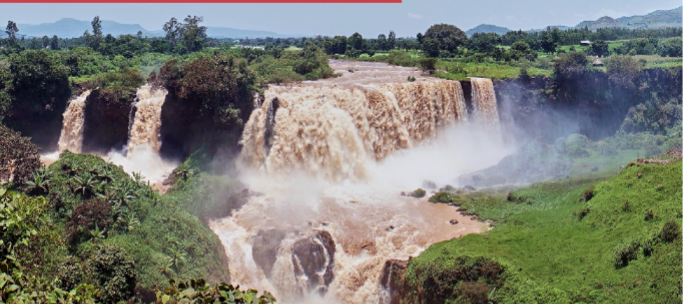
Abstract: This paper examines the recent developments surrounding the Grand Ethiopian Renaissance Dam (GERD) and its implications for Ethiopia-Egypt relations, with Somalia emerging as a central point of the conflict zone. Egypt's historical involvement in Middle East conflicts, particularly regarding the Gaza conflict, highlights its significant role in regional diplomacy. However, Egypt's stance on the GERD reveals a contradictory position: while it remains relatively passive in supporting Palestinians nearby, it emphasizes its historical rights over the Nile and simultaneously supports Somalia which is both geographically distant yet strategically relevant. This dynamic raises questions about Egypt's motivations and priorities. Ethiopia, grappling with internal challenges, must effectively navigate these complexities to counter external threats. The current situation necessitates a shift in Egypt's approach; rather than clinging to historical claims; it should adopt a win-win principle that promotes equitable resource sharing from the Nile River. By exploring these interconnections, this paper aims to illuminate the complexities of Ethiopia-Egypt interactions and identify potential pathways toward resolution amidst escalating tensions.
Key words: Grand Ethiopian Renaissance Dam (GERD), Ethiopia-Egypt relations, Somalia, resource sharing, regional diplomacy
Introduction
The Grand Ethiopian Renaissance Dam (GERD) has become a significant source of tension between Ethiopia and Egypt, profoundly influencing their bilateral relations. The GERD is located in Ethiopia's Benishangul-Gumuz region, near the Sudanese border, and it plays a crucial role in Ethiopia's socioeconomic development and national energy needs. Egypt, as a downstream nation heavily dependent on Nile waters for agriculture and drinking supply, views the dam as a significant threat to its water security. Sudan occupies a strategic position between the two, facing both potential benefits from the dam's electricity generation and risks related to flooding. Although Somalia is not directly adjacent to the Nile, its involvement highlights broader regional security concerns, particularly regarding resource management and the potential spillover effects of tensions between Ethiopia and Egypt.
The Nile River is shared by ten countries, including Egypt, Sudan, and Ethiopia, but in 1959, Egypt and Sudan signed an agreement that allocated the river's water resources exclusively to themselves...
Historically, Egypt has played a vital role in Middle Eastern conflicts; however, its silence regarding the situation in Gaza raises questions about its influence in regional diplomacy. This stance appears contradictory, as Egypt seeks to uphold its historical claims over the Nile waters while simultaneously supporting Somalia a nation that is geographically distant but strategically significant for regional stability. The deployment of Egyptian troops in Somalia is perceived as part of a broader geopolitical rivalry with Ethiopia regarding the GERD. As Ethiopia faces internal challenges, it must navigate these complexities to counter external threats effectively. The current situation necessitates a shift in Egypt's approach; instead of clinging to historical claims, it should adopt a win-win principle that promotes equitable resource sharing from the Nile River.
Research Methodology
The methodology employed in this study is a qualitative approach centered on the analysis of various media sources. This method provides a comprehensive understanding of the intricate and evolving dynamics surrounding the GERD and its broader implications for regional relations. The research methodology includes the following components:
- News Analysis: The primary data is sourced from articles from reputable newspapers and international media outlets. This approach ensures a diverse representation of viewpoints and insights into the ongoing tensions.
- Digital Media Monitoring: The study incorporates digital news platforms, allowing for real-time updates and a broader understanding of public sentiment and media framing surrounding the issue.
- Content Analysis: A systematic content analysis is conducted to identify key themes and narratives within the news coverage, including coding articles based on categories like diplomatic relations, military actions, and regional security.
- Qualitative Analysis: The research involves examining the language, tone, and framing used in news reports to understand how issues are presented to various audiences and the complex interplay of geopolitical dynamics and historical context.
By combining these methods, this paper aims to clarify the complexities of Ethiopia-Egypt interactions and propose potential pathways toward resolution amidst escalating tensions.
Egypt's Role in the Middle East Conflicts
Egypt has historically served as a mediator in the Israeli-Palestinian conflict, particularly during periods of heightened violence. The recent escalation following the Hamas attack on Israel on October 7, 2023, has positioned Egypt in a pivotal role. The Egyptian government is apprehensive about a possible influx of refugees from Gaza into its territory, especially in the Sinai Peninsula, which could worsen existing security issues. In light of the conflict in Gaza, President Abdel Fattah el-Sisi has advocated for allowing humanitarian aid into Gaza while firmly rejecting any proposals to transfer Palestinian refugees into Egypt. Egypt has opened the Rafah crossing to facilitate aid but remains cautious about permitting large numbers of refugees to enter (Al-Anani 2020).
Currently, Egypt's role in the Gaza conflict appears limited to calls for humanitarian assistance, leading to perceptions among its Arab counterparts that Egypt is an unreliable partner. By not adopting a more assertive position on this matter, Egypt claims it is prioritizing assistance to Somalia, a member of the Arab League. This strategy has faced criticism, as many argue that Egypt should be more actively involved in resolving the humanitarian crisis in Gaza instead of focusing on its engagement with Somalia (The Soufan Center 2023; Harb 2023).
Egypt's Dispute with Ethiopia on GERD
The Grand Ethiopian Renaissance Dam (GERD) has been a significant source of tension between Egypt and Ethiopia. The Nile River is crucial for Egypt's water supply, providing approximately 95% of its freshwater resources (Mbaku 2020). As Ethiopia continues to fill the dam unilaterally, Egypt perceives this as an existential threat to its water security. The dispute has its roots in colonial treaties that granted Egypt and Sudan rights to the river's waters while excluding upstream countries. Ethiopia contends that these treaties are outdated and do not reflect its rights as a sovereign nation (Mohyeldeen 2021).
The agreement allows upstream nations to implement projects along the Nile without requiring consent from downstream countries like Egypt and Sudan, which has led to renewed tensions.
Ethiopia presents several key arguments to justify the GERD project. Firstly, the GERD is viewed as essential for meeting the country's economic and development needs, particularly in addressing its acute energy shortage. Additionally, the GERD is projected to enable Ethiopia to become a major electricity exporter, potentially earning up to $1 billion annually. Ethiopia also argues that the construction, filling, and operation of the GERD represent its sovereign rights over its natural resources (Al-Anani 2022).
Ethiopia commenced the filling of the GERD in July 2020, which has been conducted in several stages:
- First Stage (July 2020): Approximately 4.9 billion cubic meters (bcm) of water were captured.
- Second Stage (July 2021) The total volume increased significantly.
- Third Stage (August 2022): The reservoir volume reached about 21.5 bcm.
- Fourth Stage (August 2023): The total water volume reached approximately 41.53 bcm.
As of July 2024, Ethiopia has initiated the fifth filling phase. This has raised concerns among downstream countries, and negotiations have repeatedly stalled since 2011 (BBC News 2023).
Egypt's Self-Contradictory Position in Somalia
In stark contrast to its muted response to the Gaza conflict, Egypt has actively engaged in Somalia, signing a military cooperation agreement that includes deploying troops as part of an African Union peacekeeping mission (Ali 2024). This move is seen as part of Egypt's broader strategy to enhance its influence in the Horn of Africa amid rising tensions with Ethiopia over the GERD. Egypt's recent military cooperation with Somalia includes plans to deploy thousands of troops as part of a revamped African Union-led mission. The Egyptian government perceives its military presence in Somalia as a means to counterbalance Ethiopia's influence and secure its interests in the Nile River basin.
In August 2024, Egypt and Somalia signed a defense pact aimed at bolstering security cooperation. Under this pact, Egypt plans to send up to 10,000 troops to Somalia, marking its first significant military involvement in the region since the early 1960s (Amin 2024). However, this military involvement raises concerns about escalating tensions with Ethiopia, especially given the historical context of conflict over water resources (Amin 2024).
Resolving Internal Conflicts in Ethiopia to Address External Threats
The current conflict in Ethiopia is characterized by a complex interplay of internal strife and external pressures, particularly in the context of rising Egyptian influence. Following the Tigray War (2020-2022), Ethiopia has been grappling with renewed violence involving militia groups from the Amhara and Oromia regions. The ongoing violence not only undermines national stability but also complicates Ethiopia's diplomatic efforts to address external threats, including those posed by Egypt's military involvement in Somalia (Council on Foreign Relations 2025).
Ethiopia must prioritize dialogue and reconciliation among its diverse ethnic groups to combat external influence and stabilize its position in the Horn of Africa.
To effectively combat Egyptian influence and stabilize its position, Ethiopia must prioritize dialogue and reconciliation among its diverse ethnic groups. This approach would not only foster national unity but also enhance Ethiopia's diplomatic leverage in regional affairs. Peaceful resolution of internal conflicts is essential for establishing a cohesive front against external pressures and ensuring long-term stability in the region.
Egypt's Role in Stabilizing the Current Situation with Ethiopia
From Egypt's perspective, shifting public attention towards the Nile issue is no longer a sustainable approach. There is a pressing need for a strategic pivot towards dialogue with Ethiopia, aimed at fostering mutual development (Al-Anani 2020). To stabilize the current situation, Egypt should prioritize diplomatic engagement, enhance public diplomacy to communicate its concerns, explore economic cooperation with Ethiopia, and invest in regional partnerships with other Nile Basin countries. By implementing these strategies, Egypt can work towards a more stable and cooperative relationship with Ethiopia concerning the GERD.
Western Involvement in Resolving the Conflict
In the conflict between Ethiopia and Egypt, Western nations can play a significant role in resolving their dispute, provided they remain impartial. The escalating tensions could destabilize the Horn of Africa, a region already fraught with conflict. The West has a vested interest in maintaining stability to prevent humanitarian crises (The Soufan Center 2024). However, past involvement has been complex. Former President Donald Trump's attempt to mediate was seen as partial, with comments in October 2020 suggesting Egypt might "blow up the dam," which heightened tensions (France 24 2020). Ethiopia strongly condemned these remarks, viewing them as a dangerous escalation that undermined diplomatic efforts (Ethiopian Embassy 2020). This illustrates how geopolitical interests can complicate mediation, particularly when one party feels threatened.
Conclusion
Egypt's position in the current Middle Eastern conflicts is shaped by its historical role as a mediator, its geographical significance concerning water security with Ethiopia, and its engagement in Somalia for regional stability. As tensions continue to escalate, Egypt must navigate complex domestic pressures while striving to maintain its strategic alliances.
Egypt's dual approach—remaining largely silent on the Gaza conflict while actively engaging militarily in Somalia—highlights contradictions within its role as a member of the Arab League. This stance suggests a prioritization of national interests over collective Arab solidarity.
Ethiopia must address its internal conflicts to prevent foreign exploitation, while Egypt should engage with Ethiopia based on mutual benefit. Additionally, Western nations need to play an impartial role in facilitating a resolution. In summary, Egypt and Ethiopia should seek a peaceful resolution to their differences, focusing on creating a win-win situation for both parties.
References
- Abdu, S.K. (2024). Egypt, Ethiopia again take dam dispute to UN. Anadolu Agency.
- Addis Insight. (2024). Ethiopia's GERD reaches 100% completion in civil works. Addis Insight.
- Al-Anani, K. (2020). Water conflict between Egypt and Ethiopia: A defining moment for both countries. Arab Center Washington DC.
- Ali, Α.Μ. (2024). Why Egypt is wading into Somalia and Ethiopia's dispute. The New Arab.
- Amin, S. (2024). Egypt is cozying up to Somalia to thwart Ethiopia. Atlantic Council.
- Basheer, M., et al. (2021). Collaborative management of the Grand Ethiopian Renaissance Dam increases economic benefits and resilience. Nature Communications.
- BBC News. (2023). Why is Egypt worried about Ethiopia's dam on the Nile? BBC News.
- Chang, K.P. (2024). Egypt urges Nile Basin Countries to reassess Entebbe Agreement. Eye Radio.
- Council on Foreign Relations. (2025). Resurgence of conflict in Ethiopia. CFR.org.
- Dhaysane, M. (2024). Somalia, Egypt sign defense pact to bolster security cooperation. Anadolu Agency.
- France 24. (2020). Trump suggests Egypt may 'blow up' Ethiopia dam. France 24.
- Karr, L. and Borens, A. (2024). Africa file: September 5, 2024: Egypt, Ethiopia, and Somalia conflict looms. Critical Threats.
- Mbaku, J.M. (2020). The controversy over the Grand Ethiopian Renaissance Dam. Brookings Institution.
- Tawil, Ν.Ε. (2024). Ethiopia begins 5th filling of Renaissance Dam without agreement. Egypt Today.
- The Soufan Center. (2024). Egyptian support to Somalia furthers rift between Egypt and Addis Ababa. The Soufan Center.